Today was very emotionally heavy day.
I guess I thought about it, but it didn't really dawn on me until I started talking to my mum about the day.
just thinking about it still puts tears in my eyes.
*
Our first patients are people who generously donated their body for education purposes.
Deep inside the university in a newly renovated lab lies ~60 bodies.
Embalmed and ready to go.
Faces, hands and feet were covered because they are all very defining features of 'human'. It brings realism to them.
Before we went to the lab, the instructor said we would get hungry so eat a big meal before the lab and after. Actually smells of formaldehyde and fixing solutions are too strong so it turns off your appetite. You can literally taste the air, of its bitter taste and you know its toxic. Small droplets floating in air are probably fixing tiny portion of proteins in your body.
He was right, you become so hungry.
*
There's a special program where medical students can get a better perception of being a patient with chronic illness. And I will be participating in that program as well.
My partner and I were paired with an adorable sweet boy.
We are still trying to understand what happened to him.
It seemed to me, just a really bad combination of congenital as well as medical error resulted him being the way he is.
His prognosis is an open question.
While talking to the parents, I found out that my partner has MS (Multiple Sclerosis).
Whenever I hear about MS I think about myelin sheath because it is a demylienating condition leading to no sensation and paralysis.
The level of severity may differ but I always think about a woman in a wheel chair at SPU who shared her story with me at 7am in the morning at the University Hospital on a cold night.
*
So young.. my partner is 7 years younger than I am. younger than my little sister.
To know about the pending condition, and still pursuing this very consuming career. I could only show my admiration towards him. Adoration and admiration both.
I still feel like crying.
Monday, 30 September 2013

September 28th Ob/Gyn Shadowing
Wow, so many visits to my small blog.
I was surprised by the number of visits and no comments. I guess my writing still does not elicit any response of readers.
But if you are regular, welcome and I hope my notes are helpful.
*
Some terminologies
hemotypsis: hemo- blood + ptysis - act of spitting
nulliparous: nullus -not any + para>20 wks births; no pregnancy
Gravidity: gravis - heavy; # of times a woman has been pregnant
Some concepts
Gravida (# of pregnancy including current one)/Para (>20 wk births including viable and stillbirths)/Abortus (miscarriage or abortion)
Fetal Non-Stress Test (NST)
- measures heart rate of fetus and its typically higher. Look for deceleration and acceleration. Deceleration means fetal head compression-- good indicator for whether c-section is required or not.
Why ASA and tylenol is ok for pregnant women but not advil? advil (Ibuprofen) has an effect on prostaglandin system. That is why it is not recommended - as with any anti-inflmmatory.
*
Some facts
you can get acute tubular necrosis from prolonged surgery via hypoperfusion due to vasodilating anesthetic
Prolonged nulliparity is a risk factor for breast cancer (think too much hormone!)
no anti-inflammatory/antibiotics for pregnant woman
I was surprised by the number of visits and no comments. I guess my writing still does not elicit any response of readers.
But if you are regular, welcome and I hope my notes are helpful.
*
Some terminologies
hemotypsis: hemo- blood + ptysis - act of spitting
nulliparous: nullus -not any + para>20 wks births; no pregnancy
Gravidity: gravis - heavy; # of times a woman has been pregnant
Some concepts
Gravida (# of pregnancy including current one)/Para (>20 wk births including viable and stillbirths)/Abortus (miscarriage or abortion)
- G5P1: pregnant 5X 1 birth
- G1P1: That of a woman who has had one pregnancy of twins with successful outcomes
Fetal Non-Stress Test (NST)
- measures heart rate of fetus and its typically higher. Look for deceleration and acceleration. Deceleration means fetal head compression-- good indicator for whether c-section is required or not.
Why ASA and tylenol is ok for pregnant women but not advil? advil (Ibuprofen) has an effect on prostaglandin system. That is why it is not recommended - as with any anti-inflmmatory.
*
Some facts
you can get acute tubular necrosis from prolonged surgery via hypoperfusion due to vasodilating anesthetic
Prolonged nulliparity is a risk factor for breast cancer (think too much hormone!)
no anti-inflammatory/antibiotics for pregnant woman
Thursday, 26 September 2013
End of the intro-block is near update September 26th
Right now my room is a mess, so is my kitchen, my inbox, study notes, but most importantly my brain.
I have once told my parents that sometimes my room reflect how my brain is, but I'm not sure if having messiness around me, reflecting my inner state, is helping or not. probably not...ok I will clean.
Anyhow, leaving behind my failure... H** application, G********, C***,
I have received my white coat, soccer jersey and C** member number. Yay!
*
I think writing and organizing my thought helps me to set priorities.
*
One thing about history taking is that doctors need to remember that patients are human.
As well as hard science and medicine, shifting focus to the social and emotion of it would help reveal the diagnosis. At least to narrow down to which diagnosis from the differential.
What I meant to say is that social history is important
open-minded question is important
attention on flags!
*
History taking...it goes something like this.
-ID: Patient Id
-CC: current condition
-HPI: history of presenting illness
-Past medical/surgical history
-family history
-allergies
--Physical findings
However, asking if patient is a smoker or drinker is also important.
And social history such as their occupation and their relationship is also important. Recent travel history is important and then Paraphrasing!
For me, I switch into screener mode as soon as I have to show my history taking skills to someone else. I don't have any elaborate mechanism but I remember the sheet in the chart and use that as a schema.
One interesting thing learned: Common Depression Screening.

I have once told my parents that sometimes my room reflect how my brain is, but I'm not sure if having messiness around me, reflecting my inner state, is helping or not. probably not...ok I will clean.
Anyhow, leaving behind my failure... H** application, G********, C***,
I have received my white coat, soccer jersey and C** member number. Yay!
*
I think writing and organizing my thought helps me to set priorities.
*
One thing about history taking is that doctors need to remember that patients are human.
As well as hard science and medicine, shifting focus to the social and emotion of it would help reveal the diagnosis. At least to narrow down to which diagnosis from the differential.
What I meant to say is that social history is important
open-minded question is important
attention on flags!
*
History taking...it goes something like this.
-ID: Patient Id
-CC: current condition
-HPI: history of presenting illness
-Past medical/surgical history
-family history
-allergies
--Physical findings
However, asking if patient is a smoker or drinker is also important.
And social history such as their occupation and their relationship is also important. Recent travel history is important and then Paraphrasing!
For me, I switch into screener mode as soon as I have to show my history taking skills to someone else. I don't have any elaborate mechanism but I remember the sheet in the chart and use that as a schema.
One interesting thing learned: Common Depression Screening.

Other cool concepts
Cushing's triage
-Bradycardia
-low respiratory rate
-HTN
Thursday, 19 September 2013
September 19th 2013 Report on previous 3 weeks
From September 3rd -19th: Intro block
Overwhelming was what I felt as I was introduced to the curriculum. Dr.T going through curriculum and talking about oh-so-many different items. I wasn't hyperventilating, but I felt like I had to.
[Hyperventilating --> means increased PO2 and decreased PCO2. If the blood pH is less than 7.4, metabolic acidosis but since the compensatory mechanism - may be combined with respiratory alkalosis (look at HCO3 level)]
*
So far we have met 2 patient cases. Trauma patient and cancer patient. who knew trauma patient (ie.// stabbing) could have their kidneys affected to the point where it would threaten the life.
*
2 guest speakers. Father of adult down syndrome and breast cancer previvor.
*
We are learning about differential diagnosis. Who knew dry cough could be caused by ACE inhibitor (HBP med) but also from GERD? Who knew DVT could be caused by oral contraceptives?
*
Still struggling with research and being a critical reader to find the best possible resources for patient care.
*
1 documentary: Escape fire
Overwhelming was what I felt as I was introduced to the curriculum. Dr.T going through curriculum and talking about oh-so-many different items. I wasn't hyperventilating, but I felt like I had to.
[Hyperventilating --> means increased PO2 and decreased PCO2. If the blood pH is less than 7.4, metabolic acidosis but since the compensatory mechanism - may be combined with respiratory alkalosis (look at HCO3 level)]
*
So far we have met 2 patient cases. Trauma patient and cancer patient. who knew trauma patient (ie.// stabbing) could have their kidneys affected to the point where it would threaten the life.
*
2 guest speakers. Father of adult down syndrome and breast cancer previvor.
*
We are learning about differential diagnosis. Who knew dry cough could be caused by ACE inhibitor (HBP med) but also from GERD? Who knew DVT could be caused by oral contraceptives?
*
Still struggling with research and being a critical reader to find the best possible resources for patient care.
*
1 documentary: Escape fire
Monday, 22 July 2013
Lessons with Dr.J: July 22 Closure
This is more like 'closure' post.
Whenever I would encounter something, I would write on a scrap piece of paper thinking that it would be good to review and make post out of.
However, this practice was lost in between my procrastination and laziness.
Today as I witnessed tarsorrhaphy (sewing eye lids shut) for the first time, and then I realized I must write about this. After all, my time at the clinic was ending and perhaps this would serve as a good reminder when I have to study ophthalmology.
The patient was a frail woman, octogenarian.
The procedure done was very similar to this, except both medial and lateral corners were done so that there was a 'tiny peep hole' in case something happened to her good eye.
The reason why the mucous membrane is shaved is because cells adhere better.
Sort of like debridement in a way, it just heals better.
The healing was especially important part as the woman had shingles and therefore had lost all her sensation.
"No sensation, No healing"
The reason why tarsorrhaphy is done can be divided to 4 main reasons:
1. Neuroparalytic :Neuroparalytic keratitis is inflammation of the cornea as a sequel to interruption of sensory impulses over the fifth (trigeminal) cranial nerve. The cornea’s loss of sensitivity leaves it much more subject to injury, exposure, and infection.
2. Neurotrophic
3. Corneal disease
4. Decrease exposure.
HERPES ZOSTER --> SHINGLES --> CN 7/ CN 5 damage --> ECTROPION/KERATITIS --> ECTROPION REPAIR/ worst case: TARSORRHAPHY
and as you might have guessed, the woman suffered from shingles and suffered terrible keratitis.
HM (Hand Movement) and LP (Light Perception) was the only vision she had left.
She hardly felt anything was the local anesthetic was given to her (usually "for 7 seconds it hurts like hell!" but "hurts going in but not coming out").
Indeed the surgery was done accordingly and smoothly.
I hope her quick recovery.
Whenever I would encounter something, I would write on a scrap piece of paper thinking that it would be good to review and make post out of.
However, this practice was lost in between my procrastination and laziness.
Today as I witnessed tarsorrhaphy (sewing eye lids shut) for the first time, and then I realized I must write about this. After all, my time at the clinic was ending and perhaps this would serve as a good reminder when I have to study ophthalmology.
The patient was a frail woman, octogenarian.
The procedure done was very similar to this, except both medial and lateral corners were done so that there was a 'tiny peep hole' in case something happened to her good eye.
The reason why the mucous membrane is shaved is because cells adhere better.
Sort of like debridement in a way, it just heals better.
The healing was especially important part as the woman had shingles and therefore had lost all her sensation.
"No sensation, No healing"
The reason why tarsorrhaphy is done can be divided to 4 main reasons:
1. Neuroparalytic :Neuroparalytic keratitis is inflammation of the cornea as a sequel to interruption of sensory impulses over the fifth (trigeminal) cranial nerve. The cornea’s loss of sensitivity leaves it much more subject to injury, exposure, and infection.
2. Neurotrophic
3. Corneal disease
4. Decrease exposure.
HERPES ZOSTER --> SHINGLES --> CN 7/ CN 5 damage --> ECTROPION/KERATITIS --> ECTROPION REPAIR/ worst case: TARSORRHAPHY
and as you might have guessed, the woman suffered from shingles and suffered terrible keratitis.
HM (Hand Movement) and LP (Light Perception) was the only vision she had left.
She hardly felt anything was the local anesthetic was given to her (usually "for 7 seconds it hurts like hell!" but "hurts going in but not coming out").
Indeed the surgery was done accordingly and smoothly.
I hope her quick recovery.
*
When CO2 laser is used it can blow 'air' in and can result in subcutaneous emphysema (I google it and it says sometimes referred to Sub Q Air).
Emphysema means 'trapped air'
Usually this can also happen if someone gets DCR (dacrocystorhinostomy) because some bone is removed and so when a person blows his/her nose really hard, it can happen.
*
It is always so difficult to leave the 'position' because you become familiar with it and you identify yourself with the position.
I've had in total about 4 different position here and each leave was 1) Silent (Mutual?) 2)Lots of Yelling P/O 3) Voluntary half fired half? 4) Voluntary
I was given exit review.
1. What did you enjoy the most while working here?
Learning. To be able to witness and participate in all aspect of patient care including reception to screening and assisting was an amazing experience! The sense of fulfillment and really feeling like a part of a team working efficiently together for excellent patient care was another part I enjoyed thoroughly.
2. What did you find the most frustrating?
I don't think I was ever frustrated with anything.
3. Did you feel that management supported you?
Definitely, I was grateful for management's understanding with my volunteer and family commitment.
4. Were you given appropriate training?
Yes, while the course from SAIT provided me with academic guidance on-the-job training and guidance provided by all the other staffs (Olga, Teresa, Cheryl, Angela and Mary) helped me enormously and gave me practical understanding.
5. Were you fairly treated? were your accomplishments acknowledged?
I believe so. Yes, staffs were very appreciative and I was always so flattered.
6. Was your salary reasonable and appropriate
It was discussed.
7. Were your working condition satisfactory?
Sometimes long hours were exhausting (10 hours) but I have no complaints because I enjoyed the OR time
8. What are our office's strengths?
Strong team work, staffs' dedication to excellent patient care, professionalism, efficient staffs, caring environment, friendliness to mention few.
9. What are our office's Weaknesses?
Can't think of any
10. What would you like to see change at the office?
I would not change much, because I considered the office the most ideal in terms of how the clinic should be run. However, I wish sometimes people could be more courteous to one another if they are having a bad day because it is really infectious.
11. Are there any other areas you'd like to discuss?
Thank you very much for everything. I feel so lucky to have worked at this office and feels sorry for leaving, because I can't imagine a better office environment to work.
Monday, 13 May 2013
May 9, 2013 - Lessons with Dr. J
These days either I'm forgetful or there has not been any new significant 'lessons' for me to post in this blog.
Perhaps, it could be that I have been preoccupied.
*
Dr.J makes a very careful approach in treating his patients.
He is polite but says things that are appropriate in bull's eye manner. I would think it would take me forever to say things in that kind of manner or comes up with the vocabulary that can adequately leaves both the patient and myself perfectly content in communicating the patient's problem. Not exaggerating, but also not undermining - making my observation know if the patient shows discontent know when to move on or 'release the patient'.
The tone, the hand gesture, body language and words he choose seems to be all carefully planned.
I wonder how long and how many times you have to say it that way consciously in order to make it completely yours, which is more automatic, second-nature in a sense. Having the 'right' manner seems to be so difficult.
I have been told I think too much and over-analyze. I do, especially when it concerns what I say or do to people around me. I try to analyze how this person might have perceived me, did I creep that person out? I wonder what our next encounter will be alike? I hope this person doesn't talk about me... along that line almost obsessively. It goes both ways actually. Certain vocabs, words or things that a person says I take it as a hint.
Anyway, back to the lesson. On Thursday - my late night, we had one patient over who used own grocery store in a small town. The grocery store has been in family for 3 generations and he has sold it because such good offer came through. However, due to the effect of giant corporation, a la costco, a la walmart, a la target and etc, the new owners also had 2 other grocery stores but had to close those stores and was struggling with the store this patient sold to them.
Dr.J was more lively when he was talking to the patient during the surgery.
I was thinking that they must have lot of common because Dr.J and patient seemed to find each other pretty engaging when it came to certain topic.
However at the end of the day, Dr.J told me the reason why he kept the conversation going. The patient was on anxiety pill and that the local-anesthetic was not only the mixture of xylocaine and marcaine (6:4) but also the conversation.
I kept thinking I wonder how much Dr.J knows about me, how much he has analyzed me and etc.
Perhaps, it could be that I have been preoccupied.
*
Dr.J makes a very careful approach in treating his patients.
He is polite but says things that are appropriate in bull's eye manner. I would think it would take me forever to say things in that kind of manner or comes up with the vocabulary that can adequately leaves both the patient and myself perfectly content in communicating the patient's problem. Not exaggerating, but also not undermining - making my observation know if the patient shows discontent know when to move on or 'release the patient'.
The tone, the hand gesture, body language and words he choose seems to be all carefully planned.
I wonder how long and how many times you have to say it that way consciously in order to make it completely yours, which is more automatic, second-nature in a sense. Having the 'right' manner seems to be so difficult.
I have been told I think too much and over-analyze. I do, especially when it concerns what I say or do to people around me. I try to analyze how this person might have perceived me, did I creep that person out? I wonder what our next encounter will be alike? I hope this person doesn't talk about me... along that line almost obsessively. It goes both ways actually. Certain vocabs, words or things that a person says I take it as a hint.
Anyway, back to the lesson. On Thursday - my late night, we had one patient over who used own grocery store in a small town. The grocery store has been in family for 3 generations and he has sold it because such good offer came through. However, due to the effect of giant corporation, a la costco, a la walmart, a la target and etc, the new owners also had 2 other grocery stores but had to close those stores and was struggling with the store this patient sold to them.
Dr.J was more lively when he was talking to the patient during the surgery.
I was thinking that they must have lot of common because Dr.J and patient seemed to find each other pretty engaging when it came to certain topic.
However at the end of the day, Dr.J told me the reason why he kept the conversation going. The patient was on anxiety pill and that the local-anesthetic was not only the mixture of xylocaine and marcaine (6:4) but also the conversation.
I kept thinking I wonder how much Dr.J knows about me, how much he has analyzed me and etc.
Wednesday, 1 May 2013
Conversation in OR - May 1 2013
Gag order.

Whenever I see this word, I think about media - when socially outrageous, high-profile case takes place in a court house, judge typically "gag order" which bans journalists, juries or anyone associated with the case to not to speak a word of it outside the court.
Would you believe it if there is a similar thing in a contract that your physician signs when they sign with a big hospital ( such as hospital privileges)?
I didn't know about this until today and I also learned that you are not to divulge anything that will harm the hospital's image or which taints the institution, or it's leader's competence or reputation.
You are not allow to criticize for some of the obvious dumb things that executives do and you are not to voice any opinion if something is not working out (ie.// new policy, hospital culture) or mistakes made (non-negligence or honest mistakes due to communication error) or...
The list would be endless because you are simply not allowed to discuss anything.
This seemed counter-intuitive to me, especially because hospital is publicly-funded and thus it should be more transparent than private.
It should be more progressive because it is publicly-funded.
And then, I thought about common sense (who can criticize the system best other than ones who are directly involved with it - on front-line) and I also thought about big-brother, an Orwellian society.

I live in Canada and Canada treasures its 'Charter of Right and Freedom'. It's a fundamental rights and freedom and we as a Canadian have, respect and extend to others.
So, why is it that freedom of speech should be banned when you are a consultant working for the hospital or directly involved with the care for patients, who are Canadians, who pays tax which pays for the service?
If there is inefficiency in the system, it should be voiced and fixed.
If something should be reported, it should be made known to all and fixed.
Why can't we think about fundamentals? Why does the hospital exist in the first place? Who actually does the work at the hospital? Why can we think about the common sense?

There is a really easy-going doctor from South Africa.
He is a practicing physician here and he once said, "South Africa is a 3rd world country with 1st class medical care and Canada is a first class country with 3rd world medical care."
To make things more grim, apparently when you go to a meeting at the teaching hospital, the most discussed subject is Research. That's good... step for innovation and all... and second, which is very, seldom, discussed is teaching....ok....hmmm...skepticism here. Then, what's the third and last thing that is NEVER discussed during these meetings? patient.
I just can't understand the logic...
it seems so blatantly obvious to me that people at that stage should be able to differentiate priorities and discuss about it.
You should save, be efficient and innovate like a private company. There is an absence of any 'push' to get things done in a public system, because after all there's no fiscal year report that sets out the profits or loss, you will forever be paid the salary which increase with every year you are with the government and get pensions and health care. You don't work on holidays, oh wait bank holidays and holidays that are not quite 'red colour' yet. Sounds like a dream job, but at the same time, a leech.
Best of all, the people who are at the management level at the hospital has nothing to do with health or medicine. They have not been fully exposed to front-line work.
They are oblivious about what works and what does not and what leads to inefficiency, and they are controlled by politicians who are then controlled by big companies, who are subsidized by the governments.
This is a loop but for some reason majority of number lose out, sort of like a lottery.
I end my thoughts and discovery I made with this video.
And then just because of the way I am (...) and because I just found this...critique of the above video
... but I realized about half in, he was nit-picky about things that were not so critical and completely missed the point... saying that even if we seize all assets of top 1% it will still not be enough to cover the deficit and so on when Anne was clearly talking about principle, how the subsidy has contributed to the deficit.
Thus, I decided to unpost the critique video because it did not have a nutritious value in my opinion.

Whenever I see this word, I think about media - when socially outrageous, high-profile case takes place in a court house, judge typically "gag order" which bans journalists, juries or anyone associated with the case to not to speak a word of it outside the court.
Would you believe it if there is a similar thing in a contract that your physician signs when they sign with a big hospital ( such as hospital privileges)?
I didn't know about this until today and I also learned that you are not to divulge anything that will harm the hospital's image or which taints the institution, or it's leader's competence or reputation.
You are not allow to criticize for some of the obvious dumb things that executives do and you are not to voice any opinion if something is not working out (ie.// new policy, hospital culture) or mistakes made (non-negligence or honest mistakes due to communication error) or...
The list would be endless because you are simply not allowed to discuss anything.
This seemed counter-intuitive to me, especially because hospital is publicly-funded and thus it should be more transparent than private.
It should be more progressive because it is publicly-funded.
And then, I thought about common sense (who can criticize the system best other than ones who are directly involved with it - on front-line) and I also thought about big-brother, an Orwellian society.
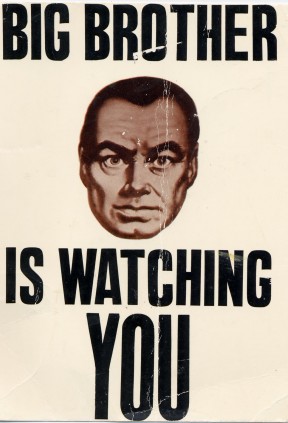
I live in Canada and Canada treasures its 'Charter of Right and Freedom'. It's a fundamental rights and freedom and we as a Canadian have, respect and extend to others.
So, why is it that freedom of speech should be banned when you are a consultant working for the hospital or directly involved with the care for patients, who are Canadians, who pays tax which pays for the service?
If there is inefficiency in the system, it should be voiced and fixed.
If something should be reported, it should be made known to all and fixed.
Why can't we think about fundamentals? Why does the hospital exist in the first place? Who actually does the work at the hospital? Why can we think about the common sense?

There is a really easy-going doctor from South Africa.
He is a practicing physician here and he once said, "South Africa is a 3rd world country with 1st class medical care and Canada is a first class country with 3rd world medical care."
To make things more grim, apparently when you go to a meeting at the teaching hospital, the most discussed subject is Research. That's good... step for innovation and all... and second, which is very, seldom, discussed is teaching....ok....hmmm...skepticism here. Then, what's the third and last thing that is NEVER discussed during these meetings? patient.
I just can't understand the logic...
it seems so blatantly obvious to me that people at that stage should be able to differentiate priorities and discuss about it.
You should save, be efficient and innovate like a private company. There is an absence of any 'push' to get things done in a public system, because after all there's no fiscal year report that sets out the profits or loss, you will forever be paid the salary which increase with every year you are with the government and get pensions and health care. You don't work on holidays, oh wait bank holidays and holidays that are not quite 'red colour' yet. Sounds like a dream job, but at the same time, a leech.
Best of all, the people who are at the management level at the hospital has nothing to do with health or medicine. They have not been fully exposed to front-line work.
They are oblivious about what works and what does not and what leads to inefficiency, and they are controlled by politicians who are then controlled by big companies, who are subsidized by the governments.
This is a loop but for some reason majority of number lose out, sort of like a lottery.
I end my thoughts and discovery I made with this video.
And then just because of the way I am (...) and because I just found this...critique of the above video
... but I realized about half in, he was nit-picky about things that were not so critical and completely missed the point... saying that even if we seize all assets of top 1% it will still not be enough to cover the deficit and so on when Anne was clearly talking about principle, how the subsidy has contributed to the deficit.
Thus, I decided to unpost the critique video because it did not have a nutritious value in my opinion.
Subscribe to:
Posts (Atom)